Curated Reading Music: How to Choose & Top Playlists 2026
-
 Reading Focus
-
Quiet Study
-
Instrumental Calm

Quick Guide: Reading Music
- Best for: Book lovers, students, and professionals who want to improve focus and enjoy longer reading sessions with fewer distractions.
- Key Features: Instrumental arrangements, gentle dynamics, predictable patterns, and minimal lyrical content.
- Scenarios: Leisure reading, studying, library sessions, journaling, and quiet morning routines.
- Benefits: It helps reduce mental distractions, improve concentration, and create a more immersive reading environment.
Top Picks: Reading Music Tracks
01Divenire
Neo-Classical
Piano
+



02Bloom
Ambient
Chill
+

03Music for Airports
Ambient
Minimal
+

04River Flows in You
Piano
Contemporary Classical
+
05Clair de Lune
Impressionist
Piano
+
Pro Solution
Build Your Perfect Reading Playlist
Save your favorite reading tracks and enjoy uninterrupted focus at home, in the library, or on the go.
- 320kbps Quality
- Batch Download
- 100% Secure



Why Reading Music Enhances Concentration
The most effective reading music provides enough auditory structure to mask distractions while remaining cognitively unobtrusive.

"Instrumental and ambient music can help readers sustain attention and maintain immersion for longer periods."


Sarah Bennett
PhD in Cognitive Psychology
Deep Reading Sessions

Gentle background music can help readers stay engaged with complex texts by reducing awareness of surrounding distractions.
Improved Focus

Instrumental music minimizes verbal interference, allowing the brain to devote more resources to reading comprehension.
Immersive Experience
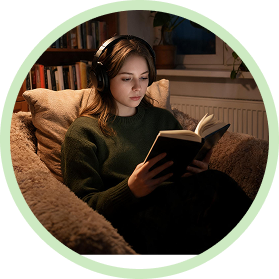
Consistent ambient sound helps create a mental environment that supports sustained attention and narrative immersion.
How We Choose the Best Reading Music
Our playlists are selected using principles from cognitive psychology, focus research, and listening behavior to ensure they complement reading rather than compete with it.
Instrumental First
We prioritize instrumental tracks because lyrics can interfere with language processing and reading comprehension.
Moderate Tempo
Music with a stable and moderate pace helps maintain concentration without creating unnecessary stimulation.
Low Distraction Design
We avoid tracks with sudden volume spikes, dramatic transitions, or highly complex arrangements that may interrupt focus.
Long Listening Comfort
Selected tracks remain enjoyable over extended reading sessions, making them suitable for both casual and intensive reading.
Pro Tips for Better Reading with Music
The right listening habits can make reading music significantly more effective for concentration and enjoyment.
01

Match Music to Reading Type
Ambient and classical music often work best for fiction and deep reading, while light lo-fi or piano music can complement study materials and non-fiction books.
02

Keep the Volume Subtle
Reading music should remain in the background and never compete with the text for your attention.
03

Avoid Lyrics for Complex Texts
When reading academic material or detailed content, instrumental music generally produces better concentration results.
04

Create Consistent Playlists
Using familiar playlists reduces the temptation to skip tracks and helps maintain uninterrupted focus.
05

Choose Ad-Free Playback
Unexpected ads or audio interruptions can quickly break concentration and disrupt reading flow.
Frequently Asked Questions about Reading Music
What is the best type of music for reading?
Instrumental genres such as classical, ambient, piano, and lo-fi are generally considered the most effective because they minimize distractions.
Can music improve reading concentration?
Yes, the right background music can help reduce environmental distractions and support longer periods of focused reading.
Should reading music have lyrics?
For most readers, instrumental music is preferable because lyrics can compete with language processing during reading.
Is classical music good for reading?
Yes, classical music is one of the most popular choices for reading because of its structured and non-intrusive nature.
How loud should reading music be?
Reading music should be played at a low volume that supports concentration without drawing attention away from the text.